February Is National Pet Dental Health Month
Give Your Furry Valentine the Gift of Oral Health This February
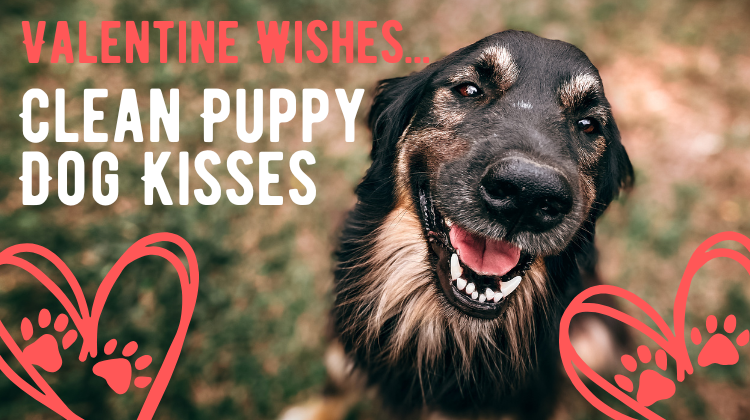
February – a month often associated with love – is also National Pet Dental Health Month. Showing love to your pet may come in the form of walks, snuggles and treats, but perhaps this month giving your pet a boost when it comes to oral health is the best way to show them you care.
Dental health is more important than some may think. Like humans, a pet’s dental health plays an important role in their overall health. Poor dental health in your furry friend can lead to other health problems such as jaw fractures, increased risk of heart disease, inflammation, a weakened immune system and weight loss – often associated with pain and discomfort while eating.
“Dental health, whether you are a pet or a human, is vital to preventing not only oral disease, but also dissemination or spread of bacteria that can cause disease in other organs such as the heart and kidneys,” explains local veterinarian Dr. Karen Nann at Pet Kare Clinic. “Also, as humans that live to kiss our furry friends, no one wants stinky kisses, especially this Valentine’s Day!”
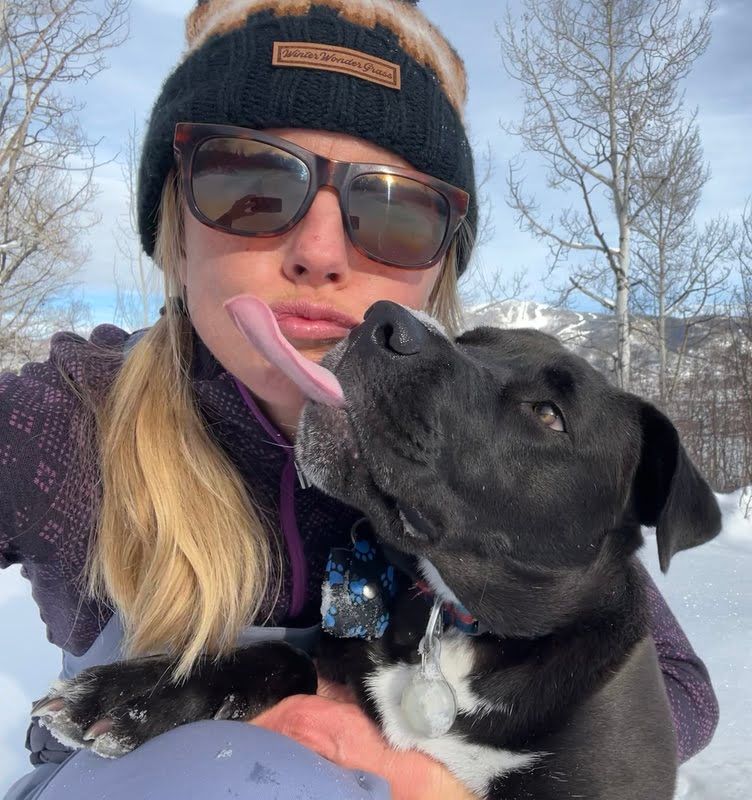
Whether it’s your human partner, or your furry one, fresh kisses are always better for Valentine’s Day!
Did you know that about 80% of dogs and 70% of cats have some form of dental disease by age three? Just like us, dogs and cats build up plaque on their teeth, which often turns into tartar, and is much harder to remove. If not regularly removed, a plaque and subsequent tartar buildup on your pet’s teeth will cause periodontal disease, the most common dental condition in dogs and cats. Periodontal disease will then slowly destroy the tissue surrounding their teeth and roots, leading to further oral health and overall health complications.
Preventative measures can – and should be – taken at home to prevent dental disease and other associated health problems. Regular tooth brushing is the single best way to help your dog or cat keep their oral health in check. Dental chews and treats are also helpful, but should not replace regular tooth brushing; instead, they should be used as additional dental care.
“The gold standard of care is brushing, but in order to be successful, you need to brush your pet’s teeth daily, or no less than every other day,” says Dr. Karen. “At Pet Kare Clinic, we are always happy to demonstrate or give tips on how to be successful!”
Additionally, there are some great products to help prevent dental disease that you can find at
Paws N’ Claws in Central Park Plaza.
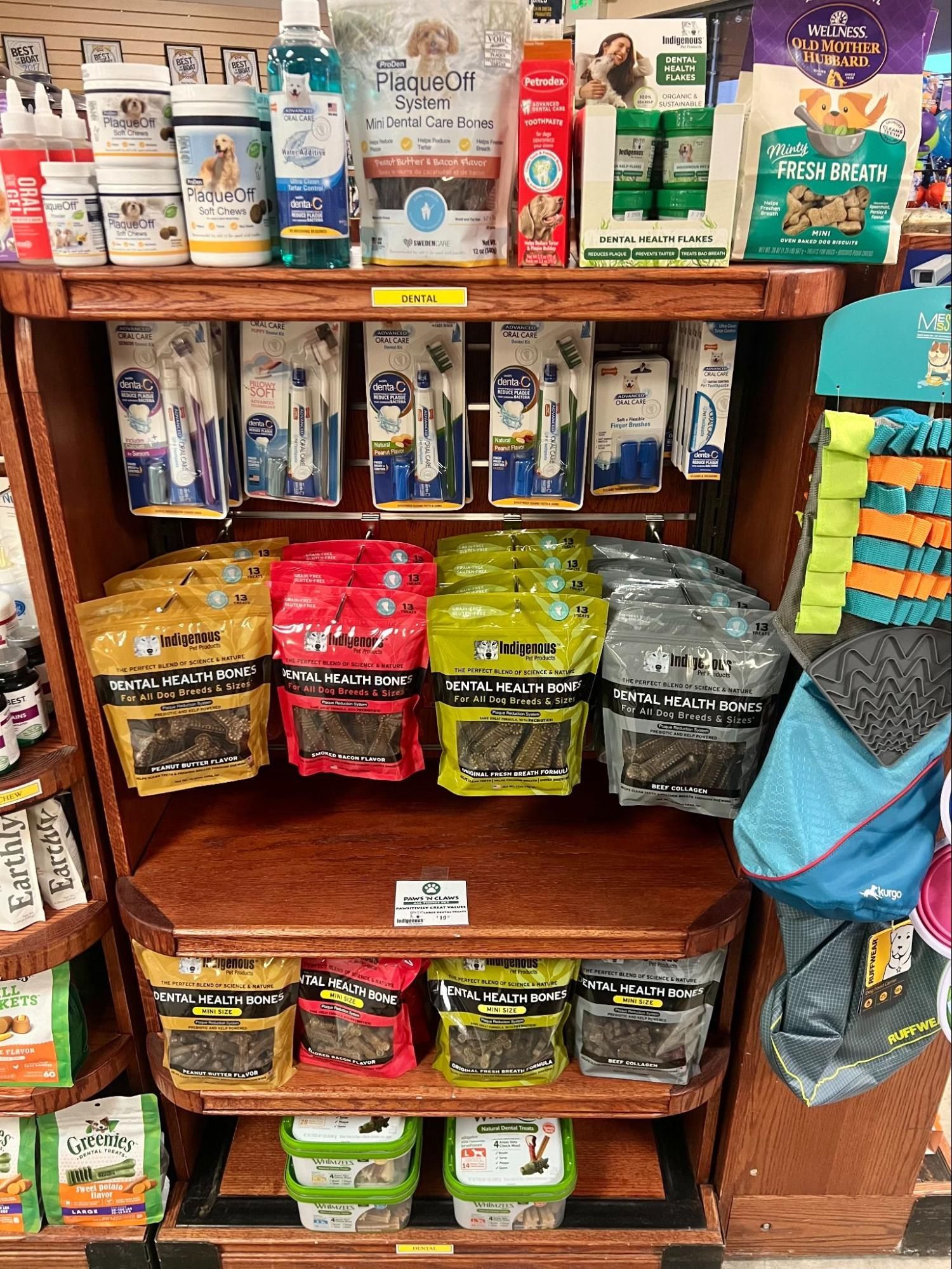
From toothbrushes to treats, there are plenty of ways to keep your pet’s smile shining bright!
Beccy Brane, Paws N’ Claws employee, shares some helpful information regarding products you may find on their shelves. “Whether it’s maintenance or a serious problem, a product that has kelp in it is amazing,” says Beccy. “Dental Health Flakes or PlaqueOff both work from the inside out, whereas dental chews and bones – that still have kelp in them – are more about pulling the plaque off their teeth. These are some great preventative options that give their gut health a boost as well.”
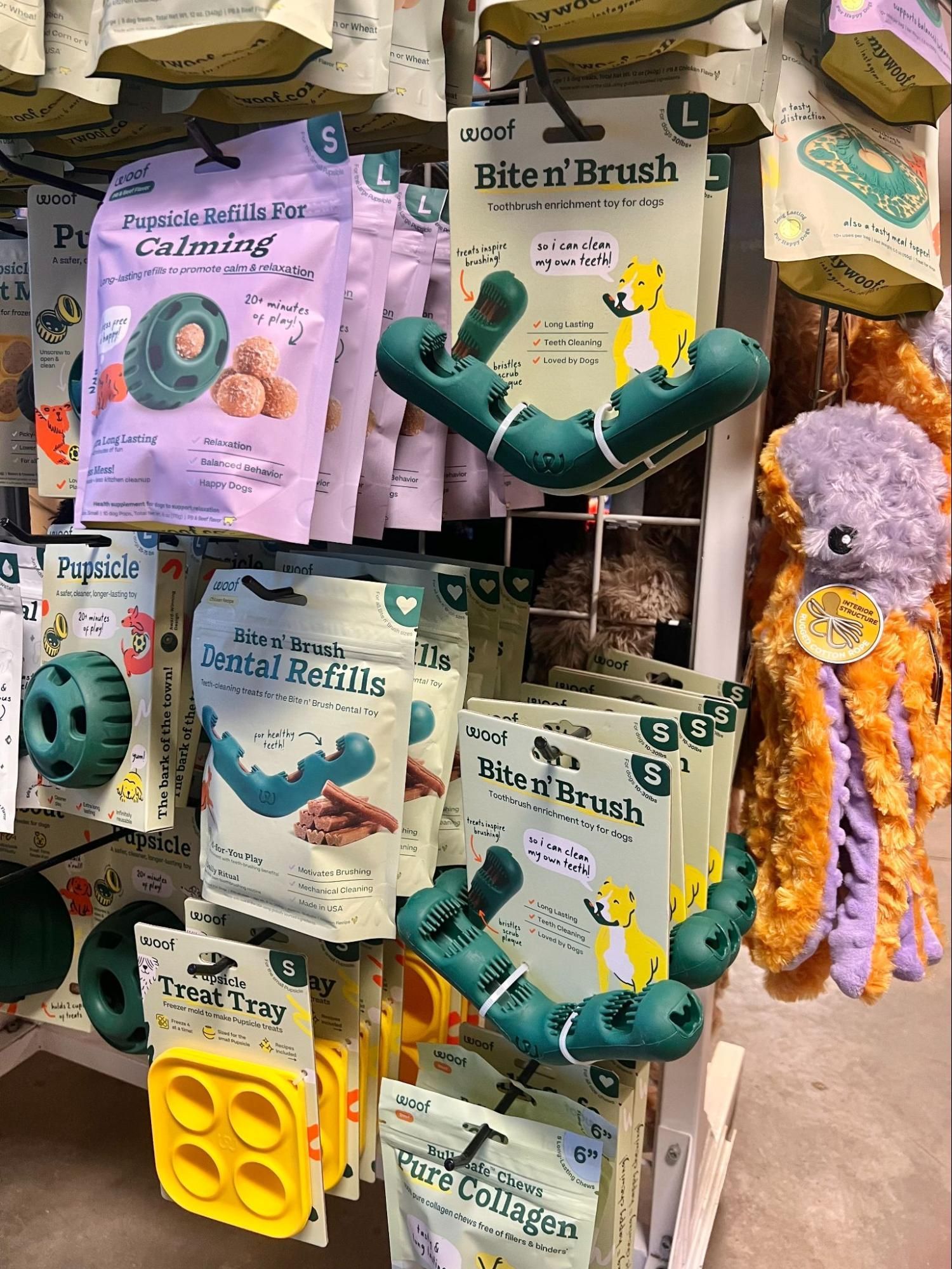
Woof makes the Bite n’ Brush to make toothbrushing easy, fun and tasty! Woof also makes the Honest Chew with a great teeth-cleaning texture, along with safe and simple ingredients!
Paws N’ Claws owner, Eli Campbell, also adds, “small dogs are more prone to dental issues because of their tight teeth configuration. It’s good to stay ahead of it rather than fall behind. By staying ahead of dental issues, you are in turn lengthening the life span of your pet. Raw bones, kelp and even chew toys add an element of removing plaque and tartar.”
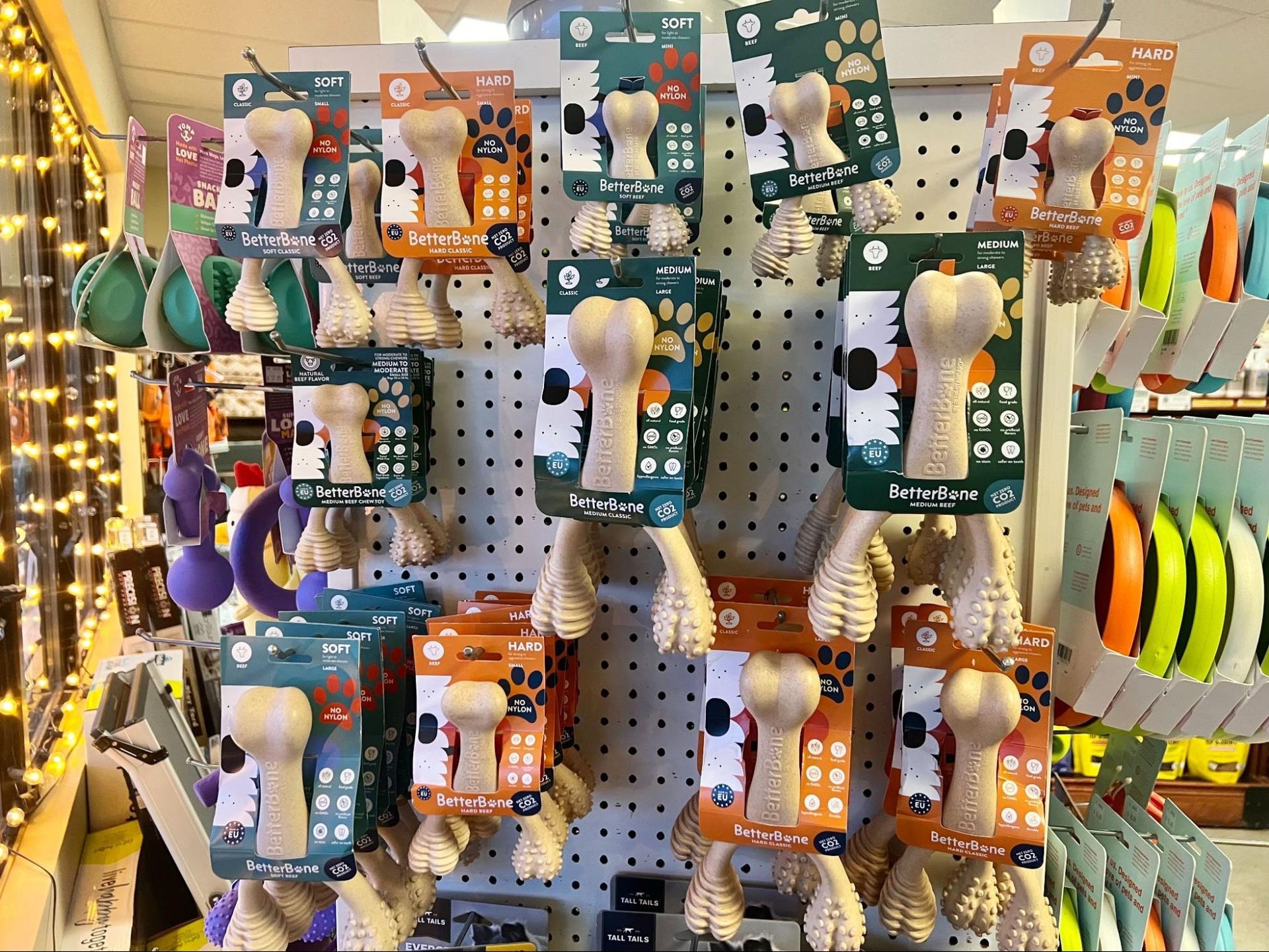
BetterBone, made of food-grade and clean ingredients, offers a great texture for pups to satisfy their chewing desires along with their teeth-cleaning needs!
Along with regular care and preventative measures, your veterinarian will keep tabs on your pet’s dental health at each wellness exam. “Unlike humans, there is no prescribed time a pet will need a dental cleaning,” explains Dr. Karen. “It is recommended every six months in humans, but in pets, we assess their calculus build up and level of gingivitis at their wellness exams. When an animal has significant dental disease, we start seeing fractured teeth, severe gingivitis or feline oral resorptive lesions in cats. At this point, we will recommend a dental cleaning. Also, something to be aware of is that dental health in animals has a significant genetic link. Typically, small breed dogs will need more dental cleanings as compared to larger breed dogs, and in cats, it is typically due to autoimmune issues such as feline oral resorptive lesions or stomatitis, which require earlier dental cleanings.”
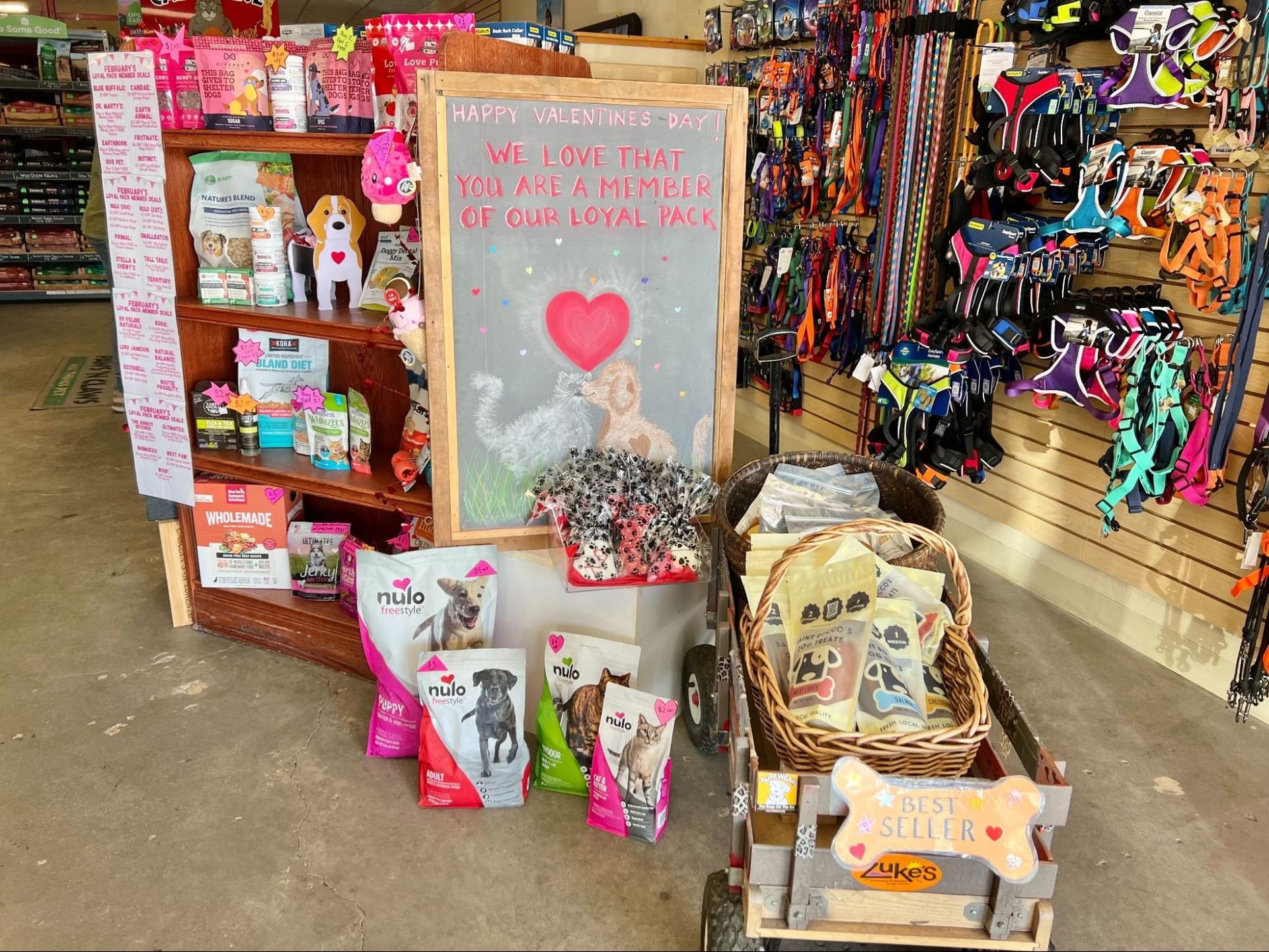
At Paws ‘n Claws, we love that you are a member of our loyal pack! Being a member of our loyal pack means more savings and frequent buyer deals for you and your furry friend! If you are not a member, please come visit us and join the pack today!
With these helpful tips from our friends at Paws N’ Claws and Pet Kare Clinic, boosting your pet’s oral health is a great gift idea this Valentine’s Day – and a great way for those canine or feline kisses to not be stinky! And of course, don’t forget those oh so cute Valentine’s Day treats and toys for the furry love in your life!
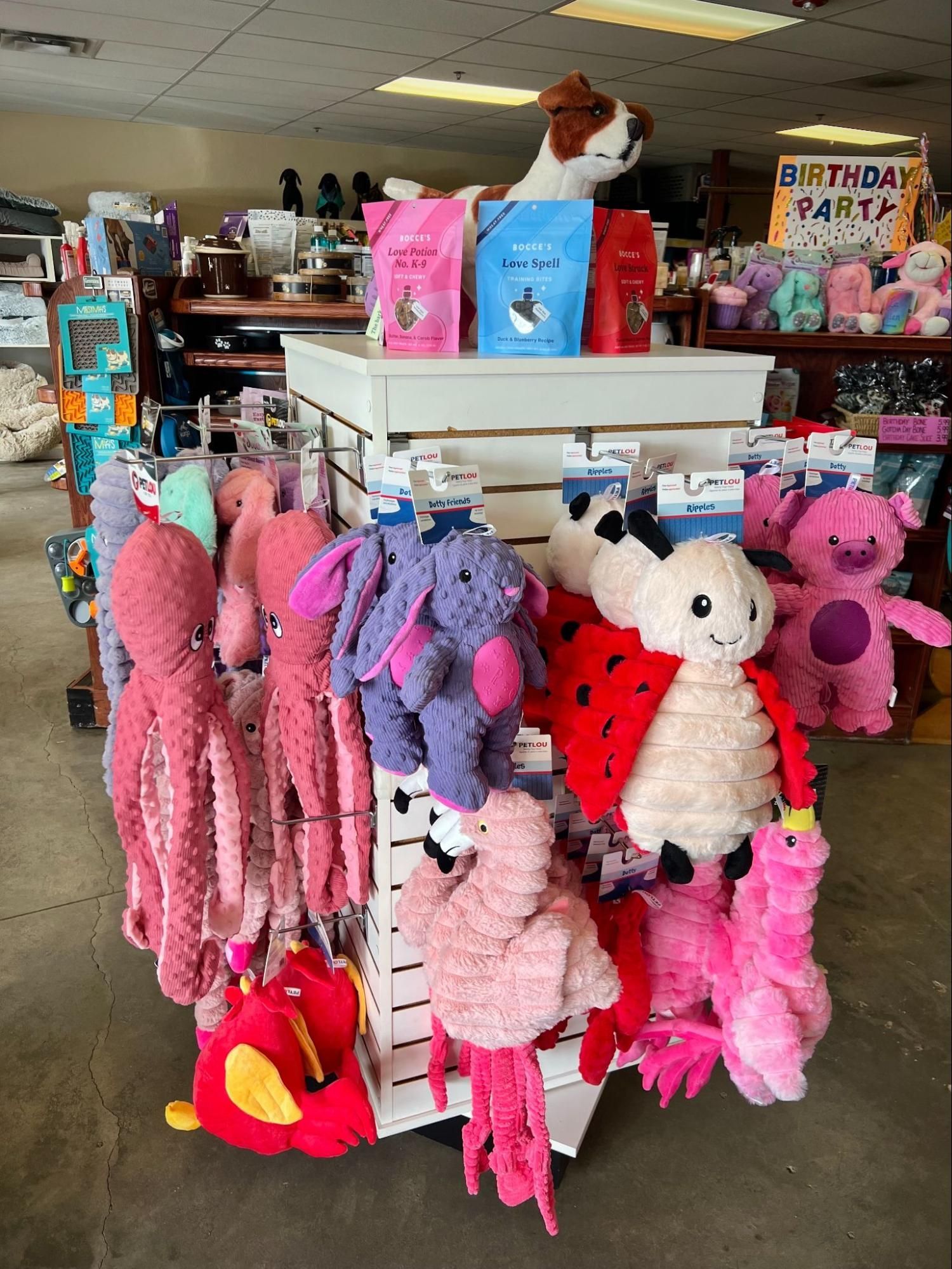
Pinks, purples and reds adorn the current toy display, along with special Valentine’s Day treats and cookies that will show your pup how much you care!